



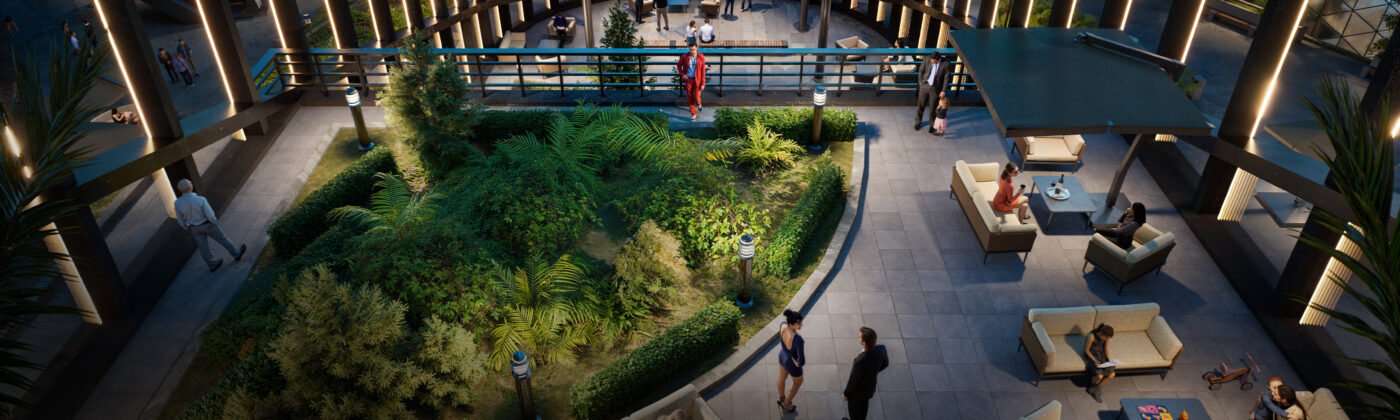
The Architect’s Guide to 3D Rooftop Terrace Design
In today’s cities, rooftops are no longer just empty spaces. They have been transformed into valuable outdoor rooms perfect for relaxing, entertaining, and enjoying the view. For architects, designing these rooftop terraces is an exciting challenge. The most important tool for this job is the 3D Exterior Design Service. It allows you to see a photorealistic version of the finished terrace long before construction begins, turning ideas into a clear and stunning visual plan.
Understanding Rooftop Terraces
A rooftop terrace is a curated open-air environment, transforming a building’s summit into a functional landscape that merges immersive outdoor living with panoramic horizons.
It offers a versatile foundation that adapts to diverse lifestyles, from a tranquil private sanctuary enveloped in greenery to a dynamic entertainment space featuring a fully-equipped outdoor kitchen. It is an extension of the interior living space, breaking down the walls between inside and out and offering a unique perspective of the surrounding cityscape.
The Irresistible Allure of Rooftop Terraces
The drive to develop rooftop spaces is more than a trend; it’s a response to modern urban challenges. As ground-level space becomes increasingly scarce and expensive, looking upwards provides a valuable solution. For property owners, a well-designed terrace significantly increases the usable square footage and property value. For residents and users, it provides a private escape, a connection to nature, and an unparalleled venue for entertainment. In dense urban centers, these elevated sanctuaries offer a breath of fresh air, both literally and figuratively.
The Unbeatable Advantage of 3D Rooftop Visualization
Rooftop terraces present unique design challenges that make pre-visualization critical. Unlike interior rooms, they involve complex structural considerations, weatherproofing, drainage, and panoramic views. Here’s why 3D Visualization in Dubai and beyond has become indispensable:
Clarity and Vision Alignment: It bridges the gap between an architect’s technical drawings and a client’s imagination. A client may not understand a 2D plan, but everyone can understand a photorealistic image.
Informed Material and Furniture Selection: Seeing how different paving stones, decking materials, planters, and outdoor furniture look together in the correct sunlight and context prevents costly mistakes. You can assess the aesthetic and practical impact of every choice before purchase.
Spatial Planning and Flow: 3D models let you virtually walk through the terrace to perfect its circulation and layout, ensuring a natural, functional flow between distinct zones, such as dining and lounge areas.
Marketing and Pre-approval: For developers, stunning 3D renders are powerful marketing assets that can pre-sell units or secure funding. They allow potential buyers to emotionally connect with the space and envision their life there.
Crafting Your Rooftop Oasis: The Must-Have Elements
A successful terrace is more than just furniture on a roof. When utilizing a 3D Exterior Design Service, ensure these elements are meticulously modeled:
Zoning: Define distinct areas for different activities, dining, lounging, cooking, and gardening. 3D renders help visualize how these zones interact and coexist.
Flooring and Materials: Choose robust, climate-resistant surfaces and leverage 3D texturing to evaluate options like composite decking, porcelain tiles, and artificial turf.
Planting and Greenery: Integrate strategic greenery through planter boxes and living walls, or even small trees. 3D Visualization can accurately depict how plants will grow and cast shadows over time, contributing to the microclimate.
Shading and Shelter: Model pergolas, cantilevered umbrellas, or retractable awnings to provide relief from the sun. This is crucial for projects using 3D Visualization in Dubai, where sun path analysis is a key component of comfort.
Lighting: Design an ambient lighting scheme. The 3D model can simulate how the space will look at night, ensuring pathway lights, accent lighting for plants, and overhead string lights are perfectly placed.
Privacy Screens and Windbreaks: Visualize how decorative screens, trellises, or reinforced glass panels will provide privacy without compromising the view or feeling enclosed.
Bringing Designs to Life: The 3D Rendering Process
The design process unfolds through a cycle of continuous collaboration and refinement. It begins with the architect’s initial concepts and floor plans. These are then translated into a basic 3D model by a visualization specialist. From there, materials, colors, and objects are applied. Multiple camera angles are set up to showcase different views of the terrace, from wide shots capturing the entire space to intimate views of a seating nook. Revisions are made within the model, allowing for effortless experimentation with different design options until the final design is realized with precision.
Mastering 3D Rooftop Visualization
To maximize the value of your 3D Exterior Design Service, follow these guidelines:
Prioritize Realism: Use high-quality, realistic textures for wood, stone, and fabric. Pay close attention to lighting, the angle of the sun, the softness of shadows, and the glow of golden hour can make or break a render’s believability.
Populate with Life: A great render tells a story. Populate the scene with realistic-looking people, subtle decorative items, and table settings. This helps the client connect with the space on an emotional level.
Showcase the Context: Especially in a city like Dubai, the view is a primary feature. Ensure the surrounding cityscape or landscape is accurately and beautifully represented in your 3D Visualization in Dubai projects. This sells the dream.
Create a Day and Night Scene: Presenting both scenarios gives a complete understanding of the terrace’s functionality and atmosphere throughout the day.